Field guide for tortoise keepers
TortoScope
Snap a plant. Find out if your tortoise can eat it.
available on iPhone, iPad & Android


You've spotted a wildflower in the garden and you're not sure if your tortoise can eat it. You're foraging on a walk and want to know what's edible. You're checking a houseplant before you bring it into the habitat. Take a photo, get an answer.
TortoScope in numbers
- over1,100 plants in the safety catalogue
- over6,800 plants identified for keepers
- 1,761 different species photographed
- 95% of identifications came with a safety rating
Most often spotted: Dandelion, Willowherb, Sorrel, Sow Thistle and Petunia.
Figures updated .
How it works
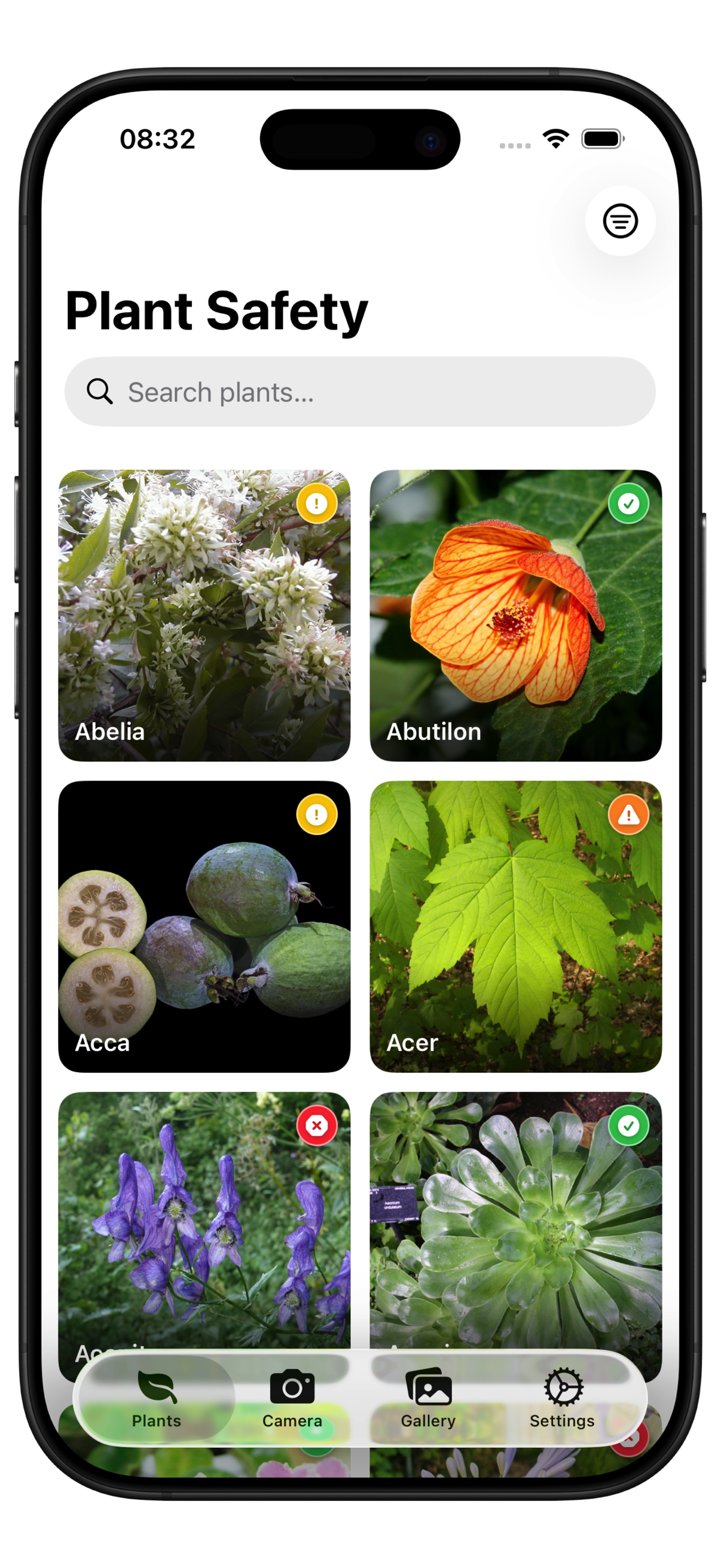
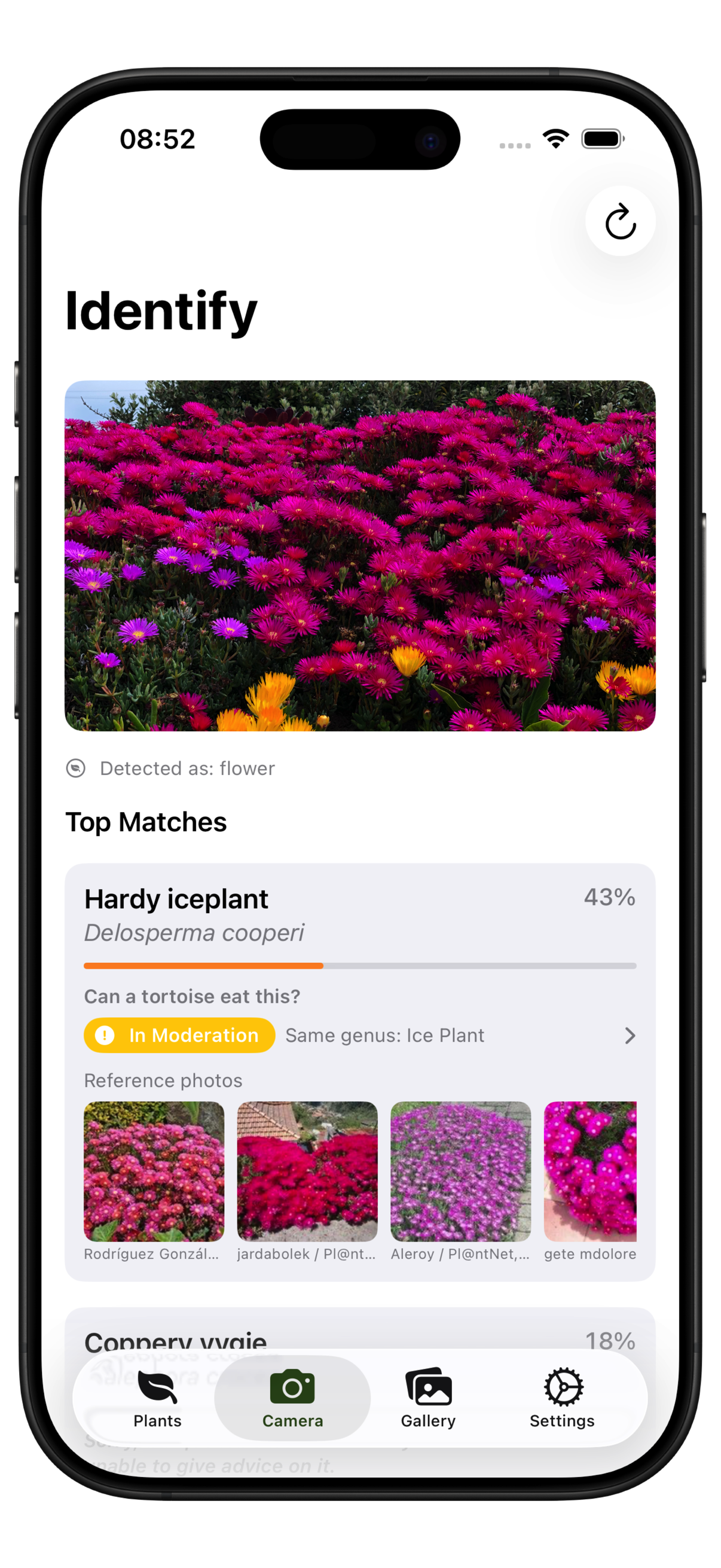
- Snap a photo of a leaf, flower, fruit, or whole plant.
- The app identifies the species and cross-references a tortoise-feeding safety database.
- You see a clear safety rating, the parts to avoid or feed, and the reasoning behind it.
- When species ID isn't certain, you still get useful guidance at the genus or family level — so common safety patterns (Solanaceae, Apocynaceae, Polygonaceae) still apply.
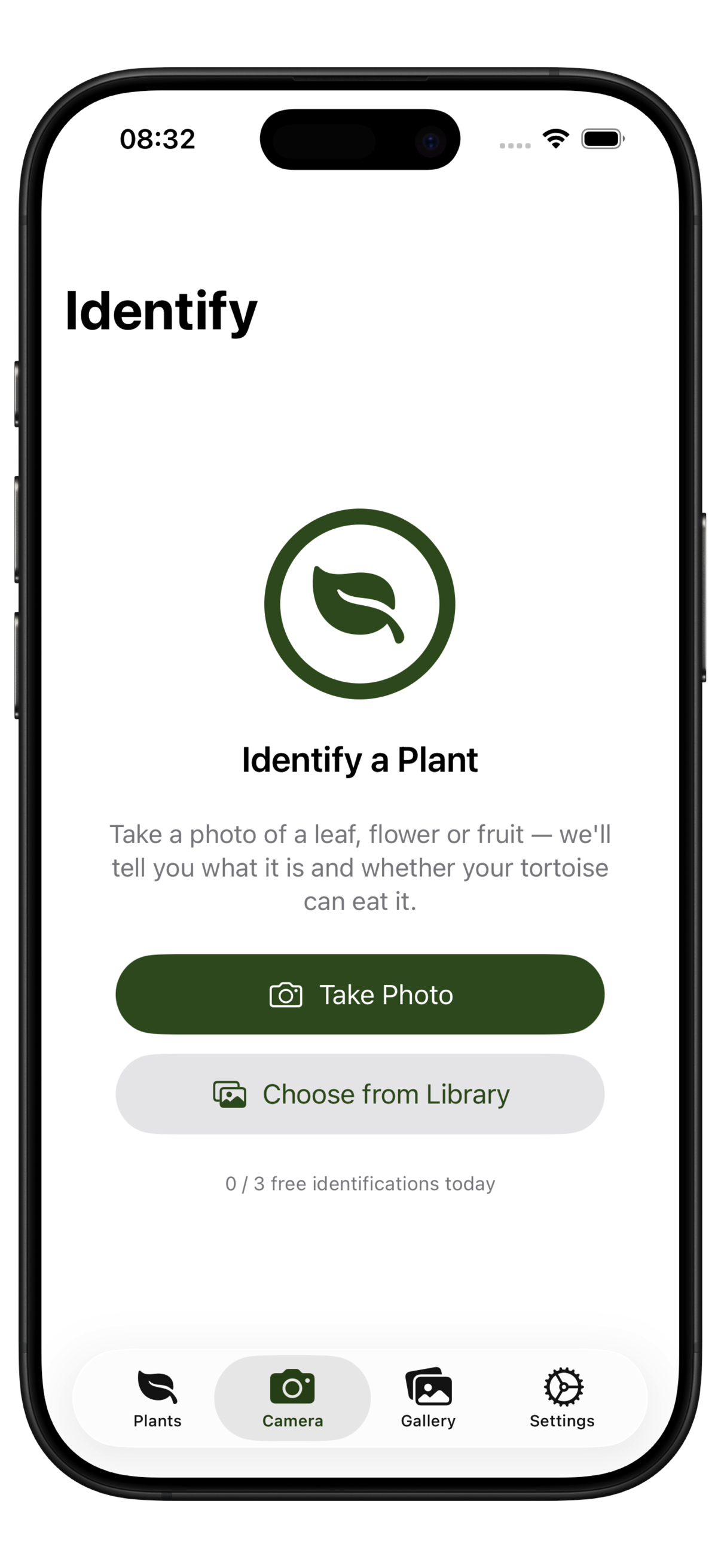
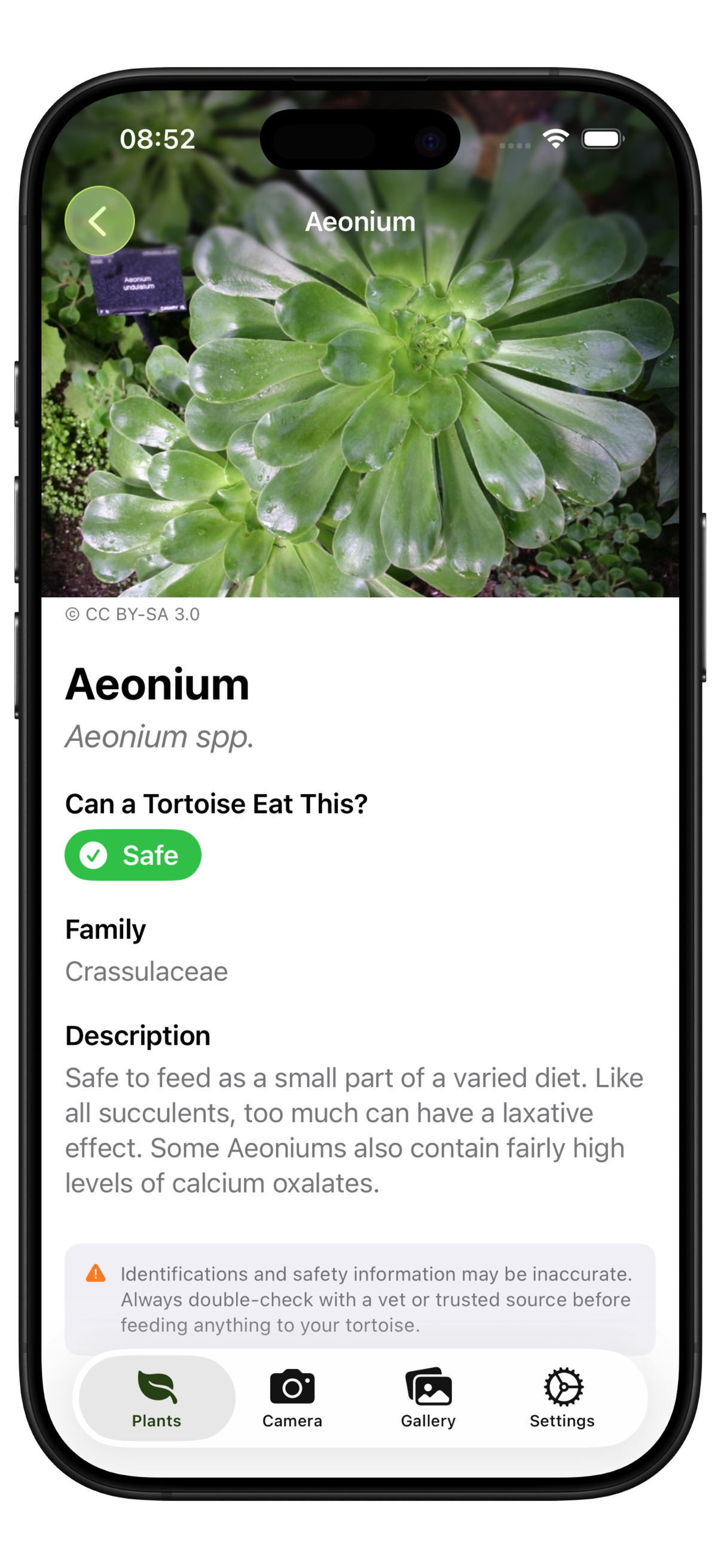
Over 1,100 plants in the catalogue
- Wildflowers, weeds, and garden herbs commonly found in UK and US gardens.
- Vegetables and salad greens you might already have at home.
- Houseplants — both safe options and the toxic ones to avoid (Pothos, Philodendron, Dieffenbachia, Sansevieria, and others).
- Tropical species for fruit-eating tortoises (Redfoot, Yellowfoot).
- Grasses for grazing species (Sulcata, Leopard).
- Cacti and succulents, including Opuntia.
Every entry includes a safety rating, the toxic compounds named where relevant (oxalates, saponins, cyanogenic glycosides, calcium oxalate raphides), which parts to feed or avoid, reference photos for confirming the ID, and notes on similar-looking species you shouldn't confuse it with.
Why getting the diet right matters
Captive tortoises rely on their keepers for nutritional balance. Wrong-food choices contribute to Metabolic Bone Disease (MBD), shell pyramiding, gout, and digestive problems. Even safe plants can cause issues at the wrong frequency — too much oxalate blocks calcium absorption, excess protein stresses the kidneys, and the wrong calcium-to-phosphorus ratio undermines shell development. TortoScope gives you the data to feed a varied, safe diet without guesswork.
Built for the tortoise-keeping community
- Russian
- Hermann's
- Sulcata
- Leopard
- Marginated
- Greek
- Indian Star
- Hingeback
- Redfoot
- Yellowfoot
Also useful for keepers of other herbivorous reptiles — green iguanas, terrapins, and the herbivorous turtle species.
Past identifications
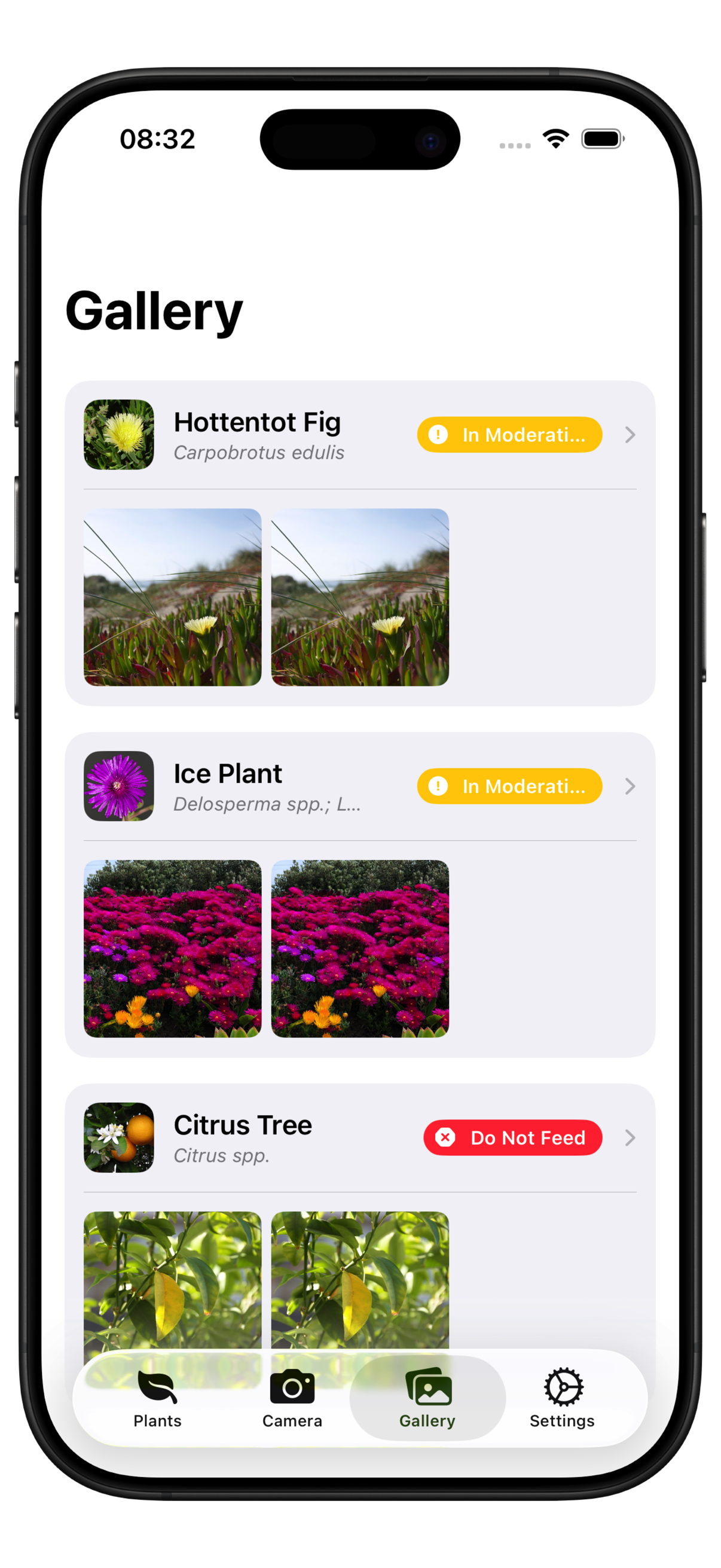
Every scan is saved to a gallery, grouped by species, so you can build a record of what you've found in the garden and what you've offered. Useful for reviewing your tortoise's diet variety, or for sharing with a vet if a problem arises.
About the safety information. The advice in this app reflects established tortoise-keeper knowledge and the conservative principles experienced keepers apply to a varied diet. It's intended as guidance — if you're ever unsure about a specific plant, your tortoise is unwell, or you're keeping an unfamiliar species, consult a reptile vet before feeding. The app supports good husbandry; it doesn't replace UVB lighting, calcium supplementation, regular weight checks, or any other element of proper tortoise care.
App details
- Platform iPhone, iPad & Android
- Price Free with In-App Purchases
- Catalogue Over 1,100 plants
- Identification Powered by Pl@ntNet
- Category Education / Reference
- Age rating 4+